

Reviewed · TOURS IN MUSCAT
muscat city tour with pick up SMALL GROUP 7 PEOPLE MAX
Muscat’s best introduction may be its Sultan Qaboos Grand Mosque, where scale, craft, and quiet come together in one remarkable stop. This four-hour tour then moves through the opera house, old souk, royal quarter, and Bait Al Zubair Museum, giving you a useful first look at the city’s faith, arts, trade, and royal life.
I like the small maximum group of seven, which keeps the outing more personal than a large coach tour. I also like the mix of grand sights and ordinary shopping streets, especially Muttrah Souk, where frankincense, perfumes, jewelry, and traditional clothing make Oman feel close at hand. The main caution is time: five major stops in four hours means some visits will be brief, and entrance tickets are extra.
Key points to know before booking
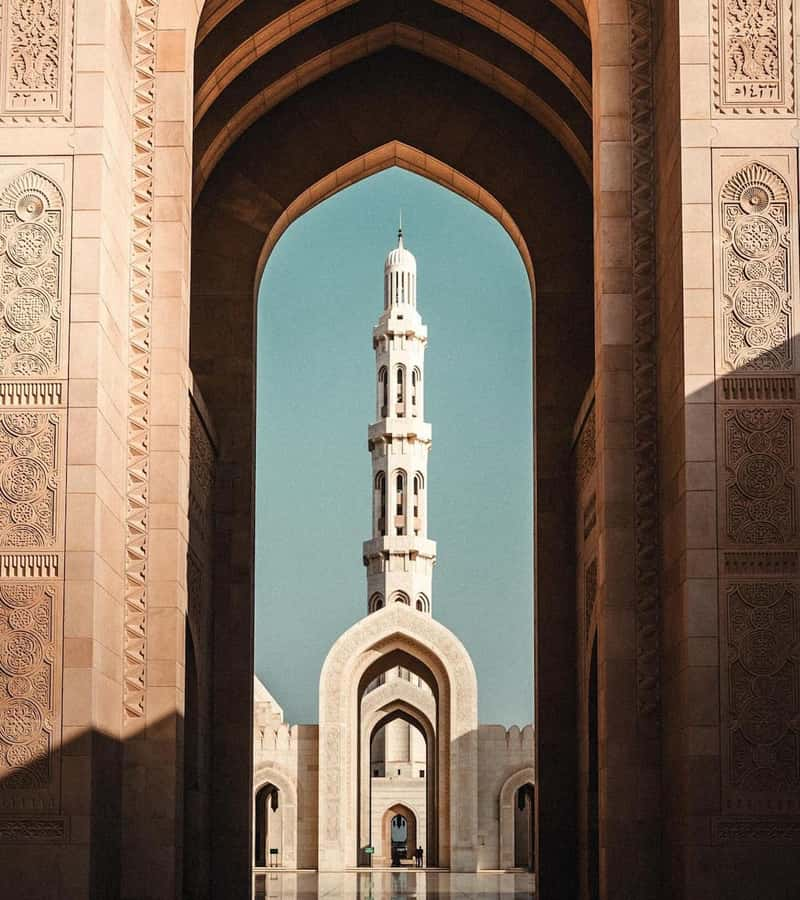
- The mosque is the visual highlight: See a vast prayer hall, a hand-loomed Persian carpet, and one of the world’s largest chandeliers.
- Small groups make questions easier: The tour is shared, but the group is limited to seven people.
- Muttrah Souk adds local flavor: Expect frankincense, perfumes, jewelry, clothing, and the usual friendly bargaining.
- Museum and opera tickets cost extra: Adults pay R.O. 3.000 for each of these two attractions.
- Friday changes the plan: The mosque and opera house are closed, so the tour visits Muttrah Fort and Qantab viewpoint instead.
- Guide quality matters here: Hawwa, Yusuf, Abdoul, Salam, and Mohammed are among the guides praised for patience, cultural explanations, and help with photographs.
Why this four-hour Muscat tour works well

Muscat is spread out, and its main sights do not sit in one compact old center. A guided car tour saves you the trouble of piecing together distant districts while giving you a basic sense of how the city fits together.
The route also covers several sides of Oman in a short morning or afternoon. The mosque explains modern Islamic architecture and national pride. The opera house reflects the sultanate’s interest in music and the arts. The souk brings you into the old commercial life of Muttrah, while the museum gives context to traditional clothing, weapons, boats, and household objects.
The shared format keeps the price at $100 per person, though you should remember that the adult tickets for the opera house and Bait Al Zubair Museum are not included. For a four-hour outing with transport, a driver-guide, and a group capped at seven, the price is reasonable if you want an orientation rather than a full-day exploration.
This is not a tour for lingering at every stop. It is a sampler. If you like taking long photographs, reading every museum label, or spending an hour bargaining in a souk, you may wish for more time. If you have only a short stay in Muscat, it covers a lot of ground without asking you to manage the driving.
More City Tours in Muscat
- Muscat: Budget Friendly City Tour
★ 4.8 · 321 reviews - Half-Day Private Muscat City Tour – Top Landmarks in Just 4 Hours
★ 5.0 · 256 reviews - Oman: Private Muscat City Tour With Pick-up/ Drop-off
★ 4.4 · 234 reviews
Sultan Qaboos Grand Mosque and its enormous carpet
The Sultan Qaboos Grand Mosque is the strongest opening stop. Completed in 2001, it was built from about 300,000 tons of Indian sandstone and can hold up to 20,000 worshippers. Even before you focus on the details, the size gives you a clear sense of the mosque’s importance in modern Oman.
Inside, the main prayer hall is the star. A hand-loomed Persian carpet fills the floor, and 600 women spent four years making it. The hall is also lit by a huge chandelier, one of the most memorable features in the building.
I would allow your guide to explain the design rather than rushing straight to photographs. The value of this stop is not only visual. It shows how contemporary Oman uses traditional Islamic forms, skilled craft, and monumental scale to express national identity.
Dress and opening arrangements matter. The tour information specifically notes that the mosque is closed on Friday. Since the visit is a religious site, follow the guide’s instructions and plan to dress respectfully. If your schedule includes Friday, you will not see the mosque on this route. Muttrah Fort and Qantab viewpoint replace it.
The Royal Opera House’s modern Omani style
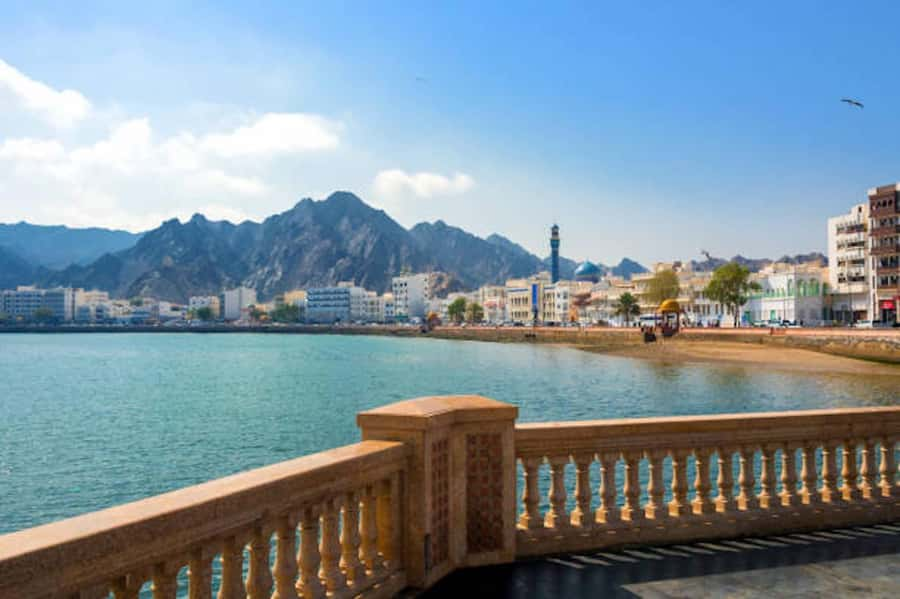
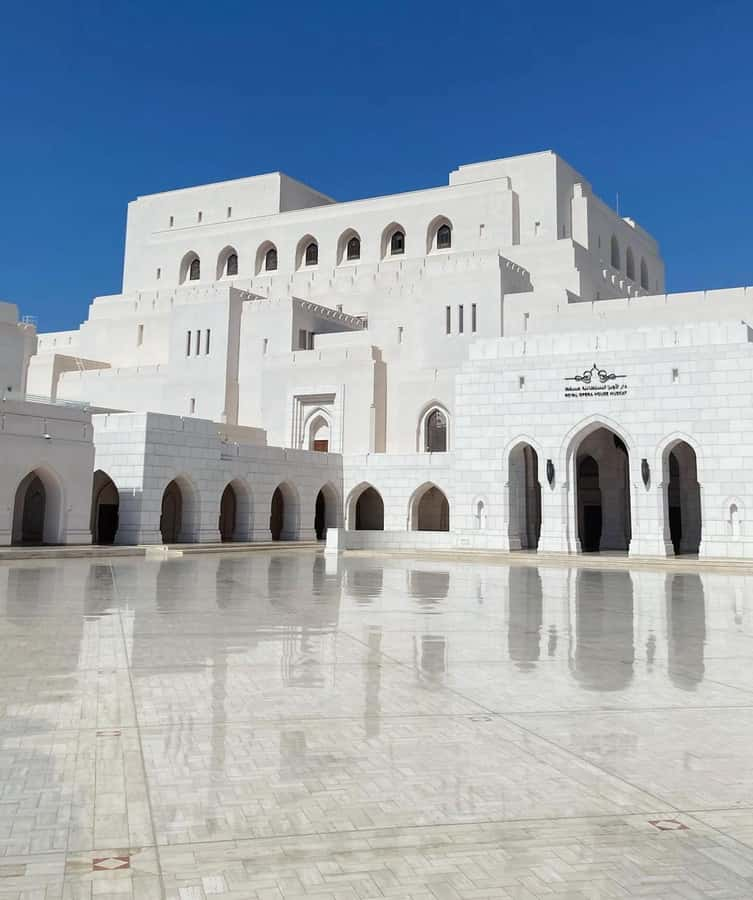
The Royal Opera House Muscat offers a sharp contrast to the mosque. Opened in 2011 on the sultan’s orders, it reflects Sultan Qaboos’s interest in classical music and the arts. Its architecture is contemporary Omani, with carefully finished interiors rather than the worn surfaces of an old market.
The main hall and theater can hold up to 1,100 people. The building is open to the public daily according to the supplied tour information, although this tour also notes that the opera house is closed on Friday. That Friday exception is the one to plan around.
An adult entrance ticket costs R.O. 3.000, paid separately. This is worth knowing before you set your budget. The stop is best for people who enjoy architecture and public buildings, not only ancient forts and markets.
Time may be limited here. You are visiting as part of a compact city route, not attending a performance or taking a long architectural tour. Still, the opera house helps explain that Muscat’s identity is not frozen in the past. Alongside forts, mosques, and souks, the city has a serious modern arts center.
Bait Al Zubair Museum and everyday Omani culture
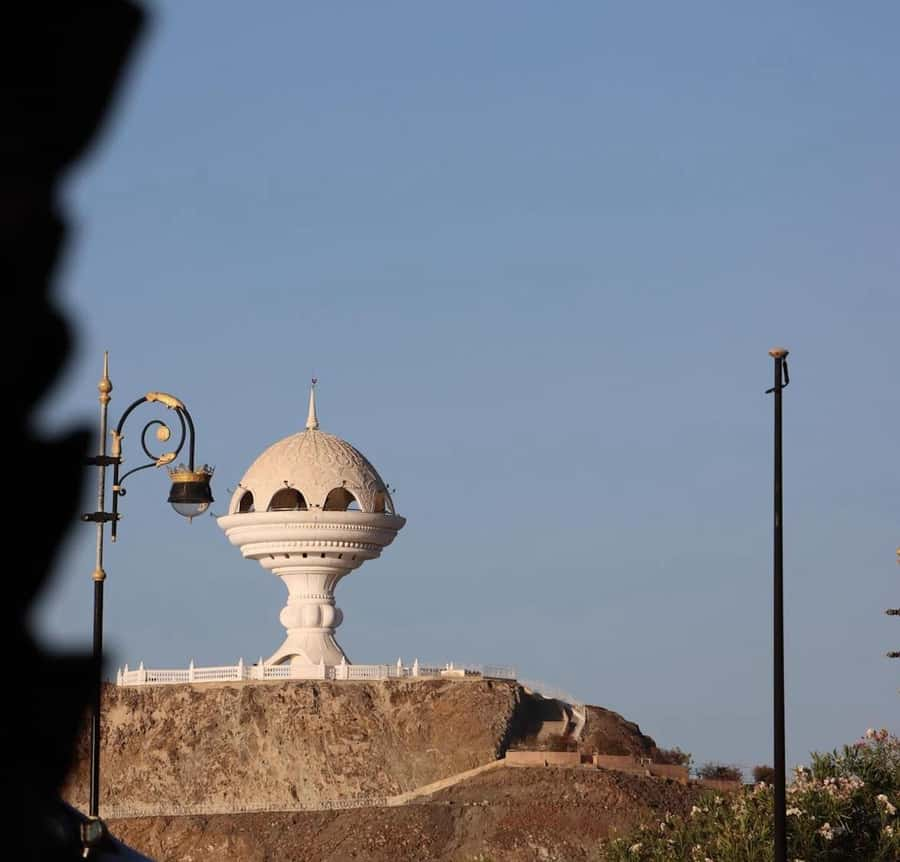
Bait Al Zubair Museum opened in 1998 and focuses on Omani culture and traditions. Its collection includes traditional weapons, clothing, dhow models, furniture, and paintings. The famous khanjar dagger, with its curved shape, is especially useful for understanding how dress and ceremonial objects carry cultural meaning.
This is the stop that gives the other sights more context. After seeing grand architecture and royal buildings, you get a closer look at objects connected with daily life. A dhow model can make Oman’s maritime past easier to picture, while clothing and weapons reveal details that are easy to miss in a quick city drive.
The adult entrance fee is R.O. 3.000, also not included. The museum visit may feel short if you enjoy collections, so use the time well. Ask the guide about objects that catch your eye. Guides such as Hawwa and Yusuf have been noted for explaining history and culture in detail, and that sort of conversation can make a small museum much more rewarding.
Other ways to see Muscat in a day:
- Muscat: City Highlights Tour with Optional Transfers
★ 4.8 · 195 reviews - Muscat: Evening Guided City Highlights Tour by Van
★ 4.8 · 175 reviews - Muscat Half Day City Tour with Audio Guiding
★ 4.0 · 155 reviews - Half-Day Private Muscat City Tour- with a local guide
★ 5.0 · 143 reviews
Al Alam Palace and the royal quarter
Al Alam Palace gives you a brief but photogenic stop. The palace is blue and gold, and its history reaches back more than 200 years. It was built by Sultan Ahmed and remains one of the ruler’s six royal residences.
You cannot enter the palace itself. The visit is a stop near the gates for photographs, so keep your expectations in line with what is possible. This is not an indoor palace tour. It is a chance to see the ceremonial exterior and the setting around Muscat’s royal quarter.
I like this pause because it breaks up the indoor visits. It also helps you understand the city’s visual style, where clean modern streets and carefully maintained public buildings meet older Omani forms. Your guide can add context, but the stop itself is fairly short.
Muttrah Souk, frankincense, and friendly bargaining

Muttrah Souk is where the tour feels most hands-on. This traditional Arab bazaar sells souvenirs, jewelry, frankincense, perfumes, clothing, and other goods. The lanes invite browsing, and bargaining is part of the experience.
You do not need to buy anything to enjoy the stop. Look at the small objects, compare perfume scents, and notice how frankincense connects shopping with Omani tradition. If you do want a souvenir, ask the guide for help with local customs and prices, then bargain politely rather than treating the exchange as a contest.
The souk can also be the most unpredictable stop for timing. A few minutes disappear quickly when you are looking at jewelry or trying to choose between perfumes. Since this is one of five main stops, keep an eye on the meeting time. You want enough freedom to browse without making the rest of the group wait.
For many people, Muttrah is the most memorable part of the outing because it is less formal than the mosque or opera house. It gives you a chance to interact, smell, compare, and make a small purchase that will remind you of Oman after you leave.
The guide can shape the whole experience

The route is straightforward, but the guide makes a large difference. Guides named in the feedback include Hawwa, Yusuf, Abdoul, Salam, and Mohammed. Hawwa is especially praised for patience, detailed explanations, a friendly manner, and help with photographs. Yusuf is described as helpful and well informed, while Abdoul is noted for taking care with a group that wanted plenty of pictures.
Those details matter because four hours can feel rushed if explanations are thin. A good guide turns the drive between stops into useful context and helps you understand why each place matters. The small group limit also gives you a better chance to ask questions than you would have on a large bus.
The tour is offered in Arabic and English. If you have particular interests, such as Islamic architecture, Omani weapons, or local shopping, say so early. You may get more from the same stops by guiding the conversation toward what interests you.
What the $100 price includes

The $100 price includes transportation, a driver-guide, and a shared tour. The group limit of seven is the key value point. You are paying not only to be driven around, but also for a more manageable group where the guide can listen and respond.
Two adult admission costs are extra:
- Royal Opera House: R.O. 3.000
- Bait Al Zubair Museum: R.O. 3.000
Sunblock is also not provided, so bring your own. Muscat can be bright and warm, and several stops involve walking or waiting outdoors. The tour lasts four hours, so it is not a replacement for a full-day visit to Muscat, but it is a practical first orientation.
Free cancellation is available up to 24 hours before the tour for a full refund, and you can reserve now and pay later. Those terms help if your wider Oman plans are still shifting, but the Friday closure remains the most important scheduling issue.
Who should book this Muscat city tour?
I would recommend it to first-time visitors who want to see Muscat’s major landmarks without arranging separate taxis. It also suits anyone staying briefly, including people who need a quick city introduction before moving on to other parts of Oman.
The tour is a good fit if you value cultural explanation over empty sightseeing. The mosque, opera house, museum, palace, and souk are not five versions of the same experience. Together, they show religion, modern arts, royal life, historic trade, and material culture.
I would hesitate if you dislike fixed schedules or want extended time at each attraction. The four-hour format is efficient, but efficiency means compromise. You also need to account for the two extra entrance fees and the possibility that Friday will replace the mosque and opera house with Muttrah Fort and Qantab viewpoint.
Should you book it?
Book this tour if you want a compact, small-group introduction to Muscat with a strong guide and a sensible spread of sights. The Sultan Qaboos Grand Mosque and Muttrah Souk are the main reasons to go, while the opera house and museum add useful contrast.
Before paying, check the day of the week, add the two museum and opera tickets to your budget, and accept that each stop will be an overview rather than a long visit. If that tradeoff suits you, this is a practical way to get your bearings and see Muscat through several different lenses in one half-day.
FAQ
How long does the Muscat city tour last?
The tour lasts four hours, including pickup in Muscat and return to Muscat.
What places are visited?
The standard route visits Sultan Qaboos Grand Mosque, Royal Opera House Muscat, Bait Al Zubair Museum, Al Alam Palace, and Muttrah Souk.
What happens if I take the tour on Friday?
The mosque and opera house are closed on Friday. The tour visits Muttrah Fort and Qantab viewpoint instead.
Are entrance tickets included?
No. Adult tickets cost R.O. 3.000 for the Royal Opera House and R.O. 3.000 for Bait Al Zubair Museum.
How many people can join the shared tour?
The group is limited to a maximum of seven people.
What languages are offered?
The tour is offered with a live guide in Arabic or English.
Just added in Muscat
- Try scuba Diving Tours To Daymaniyat Islands.★ 5.0 · 12 reviews
- Wadi Shab &Bimmah Sinkhole &Heart shaped Cave &Pebble Beach★ 5.0 · 5 reviews
- From Muscat Wadi Shab and Bimmah Sinkhole Tour★ 5.0 · 6 reviews
- Wahiba Sands&Wadi Bani Khalid desert Safari(Muscat tours) : Private tours★ 4.5 · 6 reviews
- Watching Sunrise in Wahiba Sand Desert – Early Morning Tour★ 5.0 · 7 reviews
- Wahiba Sands and Desert Safari from Muscat★ 5.0 · 3 reviews
- Wadi shab and Sinkhole adventure★ 5.0 · 5 reviews
- Wahiba Sands&Wadi Bani Khalid desert Safari(Muscat tours)★ 4.5 · 6 reviews
Tours in Muscat, compared.

Daymaniat Islands Snorkeling Trip with Brunch
Read our review →

Wahiba Desert and Wadi Bani Khalid Guided Group Tour
Read our review →
Half-Day Sightseeing Essentials Tour and Audio Guide
Read our review →

Daymaniyat Island: Snorkelling Tour with Tasty Lunch
Read our review →

Daymaniyat Islands Snorkeling Trip with BBQ Lunch
Read our review →Browse the lists this tour appears in